Categories
FSC - House and Garden Spiders
£4.00
In stock
Save this product for later
FSC - House and Garden Spiders
Product Details
Spiders guide
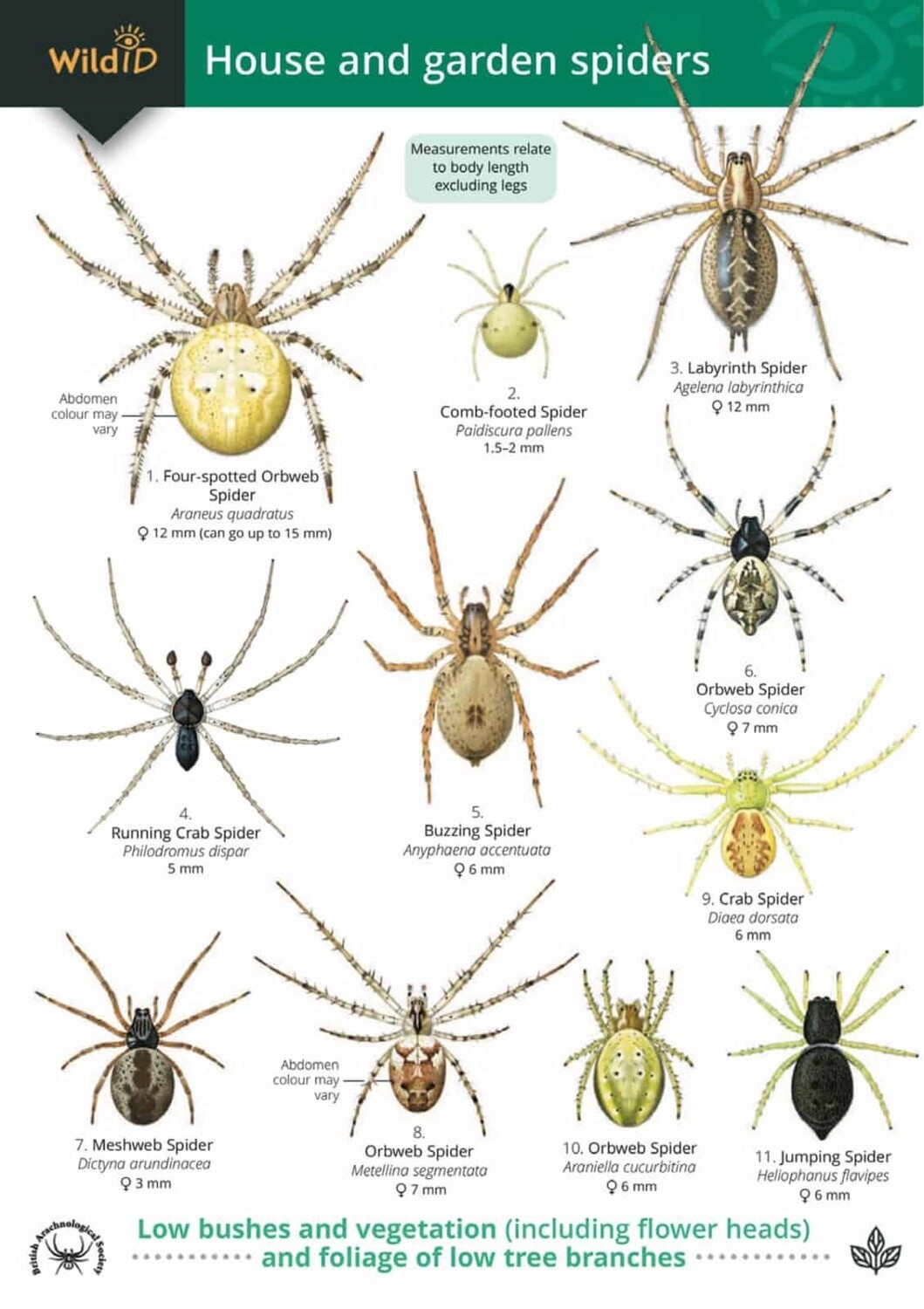
WildID Spiders fold-out guide features 40 common species seen in homes, unheated outbuildings and around gardens.
- Identification guide to 40 common species of spiders
- Also includes a concise guide to web shapes.
- Practical for use outdoors: lightweight, rucksack-sized, splash-proof
This guide showcases stunning colour paintings of each spider by Richard Lewington. We have arranged them by habitat, making it easy to narrow down what you’ve found. Use the guide to search for spiders among low bushes and plants, tucked into flower heads, on outside walls and fences, hidden in leaf litter or under stones and even inside buildings.
On the reverse side, you’ll find clear identification notes for each species. These highlight the key features to look for, along with typical house or garden habitats, web shapes or hunting styles. Even if you don’t spot the spider itself, its web can be a big clue. That’s why we’ve also included line drawings showing different types of webs, like orb webs, sheet webs and tube webs.
Spiders are invertebrates, animals without backbones, belonging to the class Arachnida. They are not insects. Other arachnids include harvestmen, false scorpions and mites. With eight legs and two distinct body parts, spiders are quite easy to tell apart from insects. All spiders can spin silk thanks to special structures called spinnerets.
Young spiders hatch straight from eggs as tiny versions of adults. As they grow, they moult several times until reaching maturity. Most British spiders live about a year, though some survive for longer. You’re most likely to see adult spiders in late spring, late summer and early autumn. In early summer, they’re harder to spot because many are still growing.
Field Studies Council worked with the British Arachnological Society to produce the Spiders guide.
Display prices in:GBP