Categories
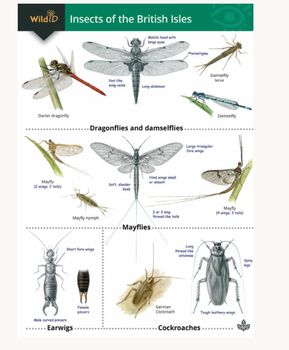
FSC - Insects of the British Isles
£4.00
In stock
Save this product for later
FSC - Insects of the British Isles
Product Details
Insects of the British Isles guide
WildID Insects of the British Isles guide is a fast reference to the main insect groups on land and water.
- Written and illustrated by Richard Lewington
- Practical for use outdoors: lightweight, rucksack-sized, splash-proof
This guide helps you spot the key features of each insect group, without using technical jargon. It covers insect orders such as mayflies, dragonflies, stoneflies, alderflies, snakeflies, scorpionflies and true flies. You’ll also find information on earwigs, cockroaches, grasshoppers, crickets, bees, wasps, ants, butterflies, moths and lacewings, as well as antlions, silverfish, firebrats, bristletails, thrips, barklice and many others.
Insects are the most successful animals on Earth, living almost everywhere from high mountains to hot deserts. Over a million species have been described, and many more remain undiscovered. In Britain alone, about 24,000 species are known. Insects play vital roles: recycling organic matter, pollinating plants, and feeding countless other animals.
Over time, insects have evolved to live in nearly every type of habitat: on land, in water, underground and even inside our homes. They are also extraordinary fliers. Despite this incredible diversity, all insects share the same basic design: a head, thorax and abdomen, protected by a tough external skeleton called an exoskeleton, and equipped with external mouthparts.
Most insects start life as eggs laid singly or in batches. Some, like aphids, are born as young nymphs, sometimes without the female ever having mated. As they grow, young insects shed their skins, in a process called moulting, often doing this ten or more times.
Display prices in:GBP