Categories
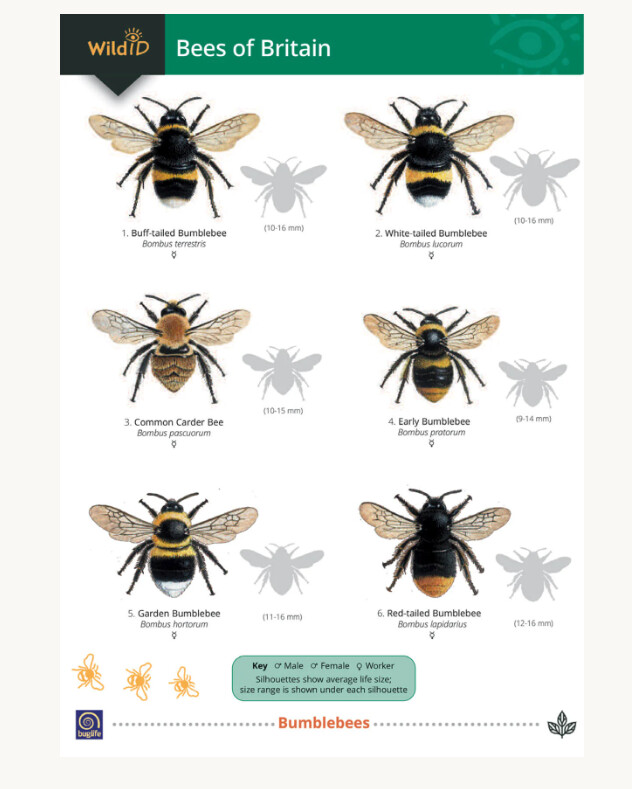
FSC - Bees of Britain
£4.00
Sold out
Sold out
Save this product for later
FSC - Bees of Britain
Product Details
Bees of Britain
WildID Bees guide is a colourful and informative fold-out bee identification chart, featuring 28 species of bees found in gardens in Britain and Ireland.
- Identification guide to 28 species of bees found in gardens in Britain and Ireland
- Colour paintings by wildlife artist and illustrator Chris Shields highlight what to look for
- Silhouettes show typical life size for each species
- Designed to be used outside: lightweight, rucksack-sized, splash-proof
Our Bee Identification Chart has 8 fold-out pages with full-colour illustrations, making it easier to identify bees in the field. Alongside the ‘Big Six’ bumblebees, the guide also features mining bees, cavity-nesting bees, and cuckoo bees. On the reverse, concise notes highlight key identification features, flight period, habitat, and range. It also offers tips for telling apart similar-looking species.
Did you know there are over 250 bee species in Britain and Ireland? Bumblebees and honeybees are social, living in colonies, but around 90% of species are solitary, with each nest built by a single female. Mining bees dig tunnels in the ground, while cavity-nesting bees like mason bees and leafcutters use hollow stems or bee hotels. Cuckoo bees lay their eggs in the nests of other bees, much like the cuckoo bird. The Sharp-tailed Bee, a cuckoo bee, is often seen in gardens.
You can attract more bee species to your garden by planting a mix of shallow flowers for short-tongued bees and deeper tubular flowers for long-tongued bees. Aim to provide blooms from early spring to late autumn. Undisturbed compost heaps and log piles can also offer nesting and hibernation sites for bumblebees.
You May Also Like
Display prices in:GBP