Categories
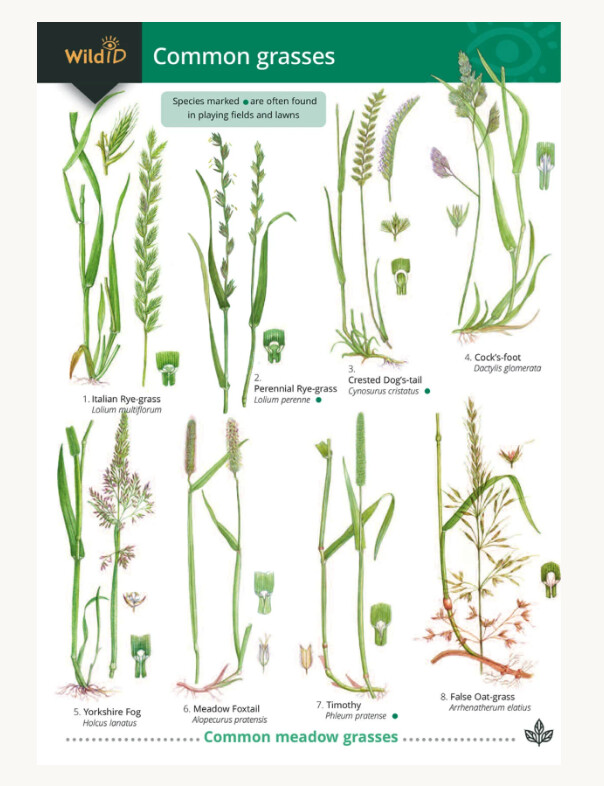
FSC - Common Grasses
£4.00
Sold out
Sold out
Save this product for later
FSC - Common Grasses
Product Details
Grasses guide
Want to start identifying grasses? WildID Grasses is an identification guide to 30 widespread and common grasses.
- Colour illustrations of each species
- Accompanying text and diagrams demystify the specialist terminology for grasses, from awns to spikelets
- Also includes multi-access vegetative key, making grass identification possible all year round, not just in summer
- Designed to be used outside: lightweight, rucksack-sized, splash-proof
For beginners, grasses are a daunting group to tackle. Book-length identification guides contain hundreds of pages of similar-looking species. So where do you start?
The Grasses guide features a manageable list of 30 species, all widespread and common. You should be able to find many of these on a short walk, even in a city centre. We have included common species of bent, fescue, brome, rye-grass, hair-grass, oat-grass and meadow-grass. Accompanying text and diagrams demystify the specialist terminology for grasses, from awns to spikelets.
Grasses form the matrix of a wide range of habitats. They are flowering plants, although the flowers are highly modified, and are not obvious unless you look closely. Unlike most plants, grasses grow from the base. If damaged, perhaps by a grazing animal or mower, grasses are more likely to survive and continue to grow. This feature has made grasses highly successful.
A huge variety of animals feed on grass, from large herbivores like elephants and cows to small insects like grasshoppers and caterpillars. Worldwide there are about 10 000 species of grass, making them one of the most numerous of the plant families, with about 160 grass species in Britain and Ireland.
You May Also Like
Display prices in:GBP